

Learning how to choose cabinet pulls for every room in your home can feel surprisingly complicated once you’re faced with dozens of sizes, finishes, and styles. What seems like a small hardware decision has a big impact on both the look and daily function of your cabinets. Homeowners often struggle to balance appearance, comfort, and proportion when selecting pulls for kitchens, bathrooms, laundry rooms, and home offices. This guide explains the sizing method professionals use and breaks down the best pull sizes for each room so you can choose with confidence.
Quick Answer: To choose cabinet pulls, use pulls that are about one-third the width of a drawer or the height of a cabinet door, then coordinate the finish with nearby fixtures like faucets and lighting. Most kitchens use 3-12 inch pulls, bathrooms typically use 3-5 inch pulls, and drawers wider than 36 inches often work better with two pulls instead of one long pull.
The 1/3 Rule: How to Choose Cabinet Pulls for Any Drawer or Door
The 1/3 rule sizes a cabinet pull at roughly one third the width of the drawer front or one third the height of the door it sits on. Divide the drawer width by three, then round to the closest pull length your hardware line actually stocks. A 21-inch drawer points to a 7-inch pull. An 18-inch drawer, the most common width in Northern Utah kitchens, points to a 6-inch pull, which is why 128 mm center-to-center pulls are the single most popular size in the industry. Cabinet doors do not follow the drawer math as tightly. A 5 to 7-inch pull mounted vertically near the edge works for most upper and lower cabinet doors, sized up slightly for tall pantry or utility doors.
The 1/3 Rule Formula for Drawers and Doors
Measure the drawer front edge to edge, not the opening behind it. Divide that number by three to get your target pull length in overall length, tip to tip, not the shorter center-to-center hole spacing printed on the box. If your target size falls between two stock lengths, we generally size up rather than down. A slightly longer pull reads as intentional. A pull that is too short can look like an afterthought.
According to industry design standards for wide cabinetry, drawers wider than 18 inches balance best when hardware placement is calculated proportionally rather than using fixed edge distances.
Instead of measuring from the absolute outer edge to position the hardware, professional layout methods dictate dividing the drawer face horizontally into equal thirds. A single pull or a pair of handles should then be aligned directly along these one-third and two-third centerlines to ensure equal weight distribution and a balanced visual profile across wide drawer faces.
For additional structural guides on handling standard cabinet installations, you can review the assembly and layout frameworks provided in the AB Custom Cabinets Laundry Room Guide.

Cabinet Pull Placement: Where Should Pulls Be Installed?
Choosing the right pull size is only half of the equation. Placement matters just as much because even perfectly sized hardware can look awkward if it is installed in the wrong location. Consistent placement creates cleaner sightlines across an entire run of cabinets and makes every drawer and door feel natural to open.
For drawer fronts, cabinet pulls are almost always centered horizontally. On shallow drawers, the pull is also centered vertically. For taller drawer fronts, such as deep pot and pan drawers, many designers mount the pull slightly higher than center to make heavy drawers easier to open without bending as much.
Cabinet doors typically receive pulls on the side opposite the hinges. Upper cabinet pulls are generally positioned near the lower corner, while lower cabinet pulls are installed near the upper corner. This keeps the handle within comfortable reach while maintaining visual consistency throughout the kitchen.
Tall pantry cabinets deserve extra attention because they can exceed seven feet in height. Instead of centering the pull vertically, most professionals place it at a comfortable hand height so daily use feels natural. Matching placement across every pantry door creates a balanced appearance while improving accessibility.
Before drilling any holes, we always recommend using painter’s tape or a cabinet hardware template to temporarily position the pulls. Seeing the hardware in place helps homeowners confirm that both the size and location look right before making permanent installation holes.
Kitchen Cabinet Pull Sizing by Drawer and Door Width
Kitchen cabinet pulls range from 3-inch options on small drawers up to 12-inch or longer bar pulls on wide pot and pan drawers. Most kitchens end up using two or three pull lengths total, not one size for everything, because drawer widths vary across a run of custom kitchen cabinets.
Standard Pull Sizes by Cabinet Width
| Drawer or Door Width | 1/3 Rule Target | Common Stock Size | Typical Use |
| 12 to 15 in | 4 to 5 in | 96mm (3.75 in CTC) | Spice or utensil drawers, upper cabinets |
| 18 in | 6 in | 128mm (5 in CTC) | Standard kitchen drawer, the most common width |
| 21 to 24 in | 7 to 8 in | 192mm (7.5 in CTC) | Deep drawers, wide vanity drawers |
| 24 to 30 in | 8 to 10 in | 256mm (10 in CTC) | Base cabinet pot and pan drawers |
| Over 36 in | Two pulls, 4 to 6 in each | Two 96mm to 128mm pulls | Wide drawers, spaced evenly instead of one long pull |
| Cabinet doors, standard | 5 to 7 in | 128mm to 160mm | Upper and lower cabinet doors |
For any drawer over about 36 inches, we usually recommend two shorter pulls spaced evenly across the front instead of one very long pull. Two pulls distribute the weight of a full drawer better and give you a more secure grip on heavy pot and pan storage, which matters for the deep base drawers we build into most Northern Utah kitchen layouts.
Bathroom Vanity Pulls: Sizing for Smaller Drawers and Moisture
Bathroom vanity pulls generally run shorter than kitchen pulls, in the 3 to 5 inch range, because vanity drawers are narrower and the hardware sits closer to a mirror where every detail shows. The same 1/3 rule applies. A typical 15-inch vanity drawer points to a 5-inch pull, which is why 96 mm center-to-center hardware is the default size we spec for custom bathroom cabinets across Weber, Davis, and Box Elder counties.
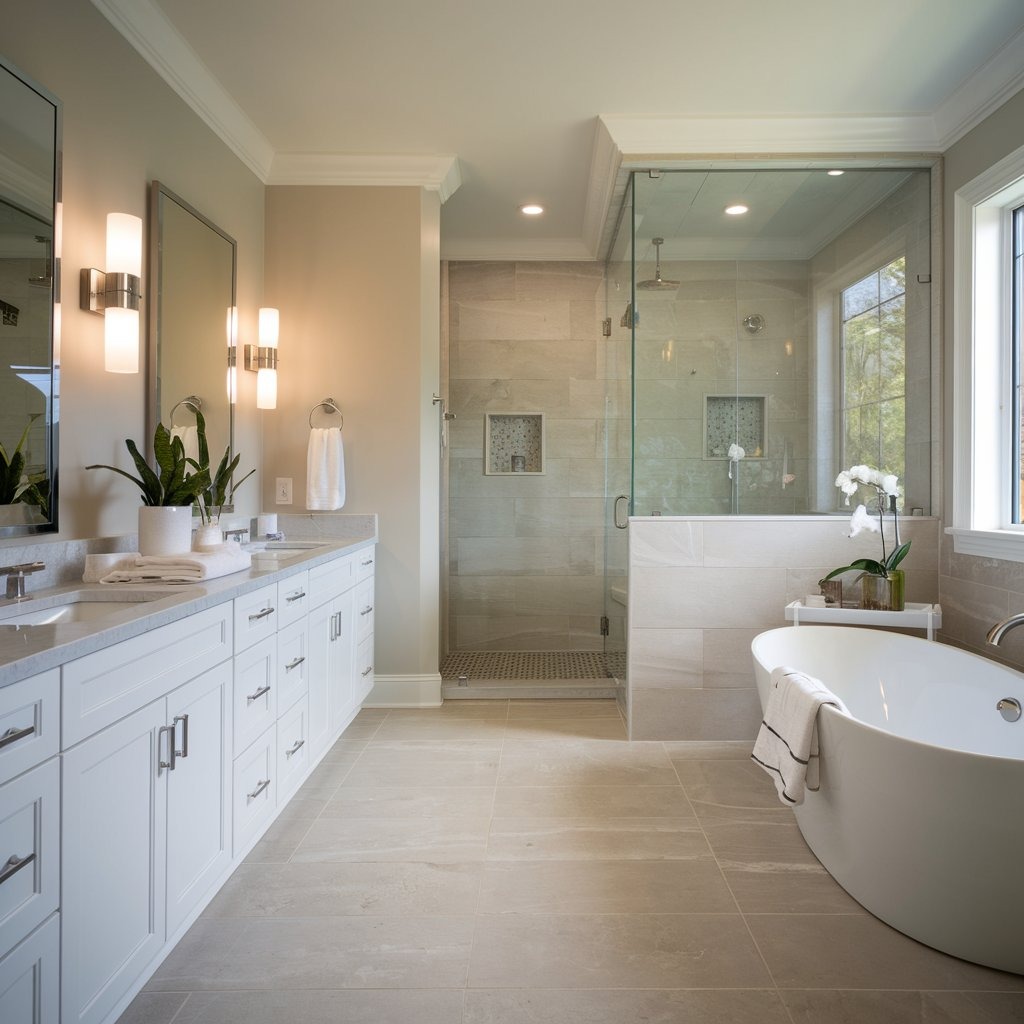
Moisture matters here more than in any other room. We steer clients toward solid metal pulls in finishes rated for wet environments, brass, stainless, or a quality plated finish, rather than lightweight painted or coated hardware that can chip or corrode near a sink. Cup pulls and finger pulls are also popular on bathroom drawers because they sit flush and are easy to grip with wet hands.
Double vanities add a small wrinkle to sizing. When two sinks share a run of drawers, we keep pull length and placement identical on both sides so the vanity reads as one balanced composition rather than two mismatched halves. Medicine cabinets and mirrored doors, when they open on a hinge rather than sliding, usually take a small knob rather than a pull, since the door swing is short and a knob is easier to grab one-handed while your other hand is busy.
Home Office and Built-In Cabinet Pull Guide
Home office and built-in cabinet pulls follow the same sizing math as kitchen hardware, but the finish choices tend to lean warmer and less commercial. Filing drawers and document storage in home office cabinets often use mid-length 5 to 7 inch pulls, while open bookcase and built-in cabinet hardware can be sized down to knobs if the doors are narrow face-frame panels rather than wide drawers.
For custom bookcases with glass or paneled doors, a smaller 3 to 4 inch pull or a simple knob usually reads better than a long bar pull, since the goal is a quiet, furniture-like look rather than a bold kitchen statement. Consistent hardware sizing and placement across a room also has a functional side. NKBA’s kitchen and bath planning guidelines emphasize predictable, reachable hardware placement as part of a well-planned space, which is one reason we keep pull height consistent across every door and drawer in a run rather than varying it door by door.
Bar Pulls vs. Cup Pulls vs. Knobs: When to Use Each
Bar pulls suit wide drawers and modern or transitional kitchens, cup pulls suit farmhouse and traditional styles with a comfortable finger grip, and knobs work best on doors and narrow drawers where a full pull would look oversized. None of the three is objectively better. The right choice depends on drawer width, door style, and how the room is used day to day.
Bar Pulls vs. Cup Pulls: Which Fits Your Style
| Hardware Type | Best For | Style Fit | Notes |
| Bar pull | Wide drawers, 18 in and up | Modern, transitional, Shaker | Follows the 1/3 rule directly; most versatile option |
| Cup pull | Drawers, especially traditional kitchens | Farmhouse, cottage, traditional | Recessed grip, comfortable, classic look |
| Knob | Doors and narrow drawers under 15 in | Any style | Lower cost per piece, simple to install and replace |
| Edge pull | Slab or flat-panel modern doors | Contemporary, minimalist | Mounts on the top edge; nearly invisible from the front |
Mixing types within one kitchen is common and works well. A typical combination pairs bar pulls on all drawers with matching knobs on doors, which keeps the hardware budget lower while still giving drawers the larger grip they need for daily use. Edge pulls, mounted along the top edge of a slab door, have become popular in contemporary Northern Utah kitchens where clients want a handle-free look without giving up an actual grip point. We size edge pulls the same way, using the door or drawer width to set the length, so the hardware still reads as proportional even though it sits almost flush.
Matching Pull Finish to Your Faucets, Lighting, and Appliances
Match your pull finish to your plumbing fixtures first, then let lighting and appliance finishes follow as a secondary layer. A kitchen with a matte black faucet reads best with matte black or dark bronze pulls, while brushed nickel or chrome faucets pair naturally with brushed nickel or satin hardware.
Matte Black, Brushed Nickel, and Brass: Choosing a Finish
Matte black cabinet pulls remain the most requested finish we install, largely because they read as a neutral against nearly any cabinet color, from painted white Shaker to stained oak. Matte black also hides fingerprints better than polished finishes, which matters on kitchen drawers used dozens of times a day.
Brushed nickel is the safest long-term choice for resale, since it has stayed in style across multiple design cycles without looking dated. Brass and gold tones have returned strongly in the last few years and pair well with warm wood tones like oak and cherry. Oil-rubbed bronze remains a strong match for traditional and farmhouse kitchens, especially alongside custom laundry cabinets and mudroom cabinet builds where a rustic, worn look fits the room.

Mixing two finishes on purpose, for example matte black pulls with brass cabinet knobs on an island, is a current trend and works as long as one finish clearly leads and the second stays in a supporting role, such as lighting or a single accent piece.
Common Cabinet Pull Sizing Mistakes We See in Northern Utah Homes
The most common mistake is sizing every pull the same regardless of drawer width, which leaves small drawers looking overwhelmed and wide drawers looking under-supported. The fix is simple: apply the 1/3 rule per drawer, not once for the whole kitchen.
• Buying based on center-to-center measurement alone. The number stamped on the box is the screw hole spacing, not the full pull length, and the two can differ by an inch or more depending on the style.
• Skipping heavy-duty hardware on garage and mudroom cabinets. Rooms like a custom garage cabinet system see more force and grime than a kitchen, so we spec thicker gauge pulls and stronger mounting screws there.
• Choosing finish before function. A beautiful pull that is too small to grip comfortably with a full hand gets replaced within a year. Size and grip comfort should come before finish, not after.
• Ignoring drawer weight. A wide pot and pan drawer loaded with cast iron needs a pull rated for repeated heavy pulls, not a decorative piece meant for a light bathroom drawer.
• Ordering hardware before the doors and drawers are finalized. Cabinet width and overlay style both shift pull placement, so hardware should be one of the last measurements confirmed, not one of the first.
We catch most of these issues during the design phase, before any hardware is ordered, which is one advantage of having the same team that designs your cabinets also spec and install the hardware. A quick walkthrough of drawer widths and door sizes, matched against the 1/3 rule chart above, usually resolves sizing questions before a single pull is purchased.
How A.B. Custom Cabinets Specs Hardware During Your Design Consultation
A.B. Custom Cabinets is a licensed and insured cabinetry shop based in Ogden and West Haven, and we design, build, and install every project with the same in-house team, so hardware sizing is planned alongside the cabinet boxes rather than bolted on as an afterthought. During your free design consultation, we measure every drawer and door individually, walk through pull styles and finishes against your countertops, faucet, and lighting, and confirm sizing before anything is fabricated.
One client working through a full kitchen and bathroom project told us the team listened closely and made sure the finished cabinetry, hardware included, was exactly what they had pictured. That kind of fit only happens when hardware is part of the design conversation from the start, not a last-minute pick from a catalog.
We build for the Northern Utah climate on every project, and hardware is part of that. Garages, laundry rooms, and mudroom cabinets get sturdier, corrosion-resistant hardware suited to temperature swings and moisture, while kitchen and office pulls are chosen mainly for daily grip and finish.

Frequently Asked Questions About Choosing Cabinet Pulls
What size cabinet pulls should I buy for a standard 18-inch drawer?
For an 18-inch drawer, the 1/3 rule points to a 6-inch pull, which typically means a 128 mm center-to-center pull, the most common size sold. Round up slightly if you are between two stock sizes.
Should I use the same size pull on every cabinet?
No. Most kitchens mix two or three pull lengths because drawer widths vary. Apply the 1/3 rule to each drawer or door individually rather than picking one size for the whole room.
Are bar pulls or cup pulls better for a kitchen?
Neither is better outright. Bar pulls suit wide drawers and modern to transitional styles, while cup pulls suit traditional and farmhouse kitchens and give a comfortable finger grip. Homeowners planning a layout often review specialized hardware style overviews like the Amerock Cup Pull Design Profile to see how mixing different shapes changes the functional feel of a room. Many kitchens ultimately use both pulls on drawers and knobs on doors.
What cabinet pull finish is most popular right now?
Matte black remains the most requested finish in A.B. Custom Cabinets’ Northern Utah projects because it works with almost any cabinet color and hides fingerprints well. Brushed nickel is the safest long-term, resale-friendly choice.
Do wide drawers need two pulls instead of one?
Generally yes. For drawers over about 36 inches, two shorter pulls spaced evenly across the front give a more secure grip and better weight distribution than a single very long pull.
Can I get help choosing hardware without committing to a full project?
Yes. Hardware selection is part of every free design consultation A.B. Custom Cabinets offers, whether you are planning a full kitchen or just replacing pulls on existing cabinets.
Ready to Plan Your Cabinet Hardware?
Choosing cabinet pulls comes down to a simple formula: one-third the width of the drawer or the height of the door, adjusted for the room and finish you want. Get the sizing right, and the hardware blends seamlessly into a well-proportioned kitchen or bath. Get it wrong, and even beautiful cabinets can look off. To explore hardware options and thoughtful cabinet design in more detail, learn more about A.B. Custom Cabinets and how our in-house team designs, builds, and installs every project across Northern Utah.
We would be glad to walk through pull sizing and finish options for your project during a free, no-obligation design consultation and written quote. Book a Free Design Consultation to get started.


